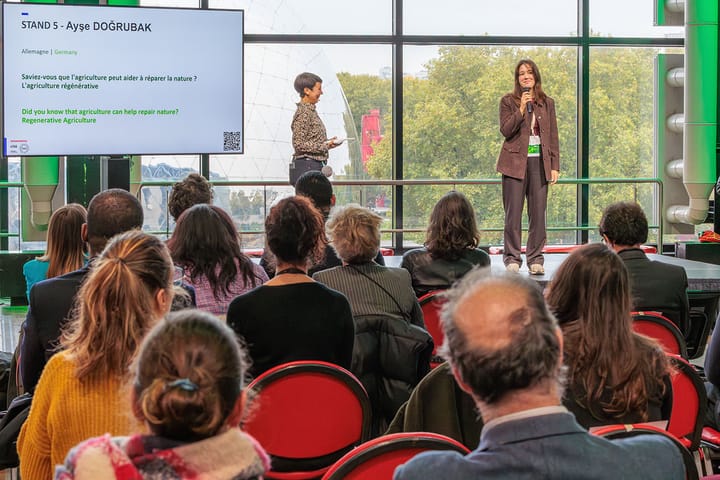
ProBioTIC at the 2025 Student Conference on Conservation Science
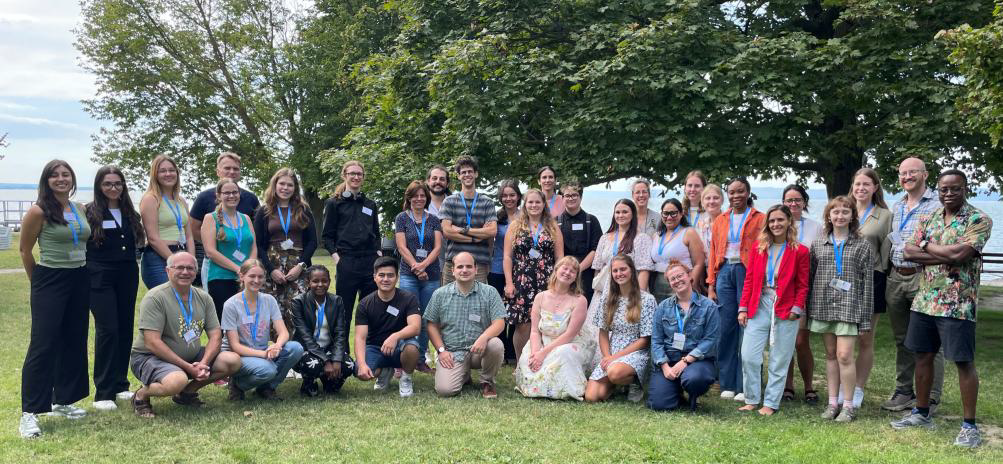
As part of its work to support early-career biodiversity researchers, the ProBioTIC (Promoting Biodiversity through Transdisciplinary Learning Interventions in the Carpathians) project held a day of training during the Student Conference on Conservation Science 2025 (SCCS).
The tenth SCCS Europe, developed by ProBioTIC partners Gabriella Süle and András Báldi, took place from 02-06 September 2025 in Balatonvilágos, Hungary. The ProBioTIC project was represented by project leader Senan Gardiner and partners from Jagiellonian University, Drs. Agnieszka Wypych and Magdalena Kubal-Czerwińska, as well as ProBioTIC consultant Tamara Mitrofanenko from UNEP and the Secretariat of the Carpathian Convention.
Building on the collaboration established in the previous year, the ProBioTIC day, held on the 3rd of September, aimed to strengthen researchers' skills in community engagement and to share findings from the Transdisciplinary ProBioTIC Seminars conducted at Jagiellonian and Leuphana Universities.
The day began following the keynote talk by Tom Breeze (University of Reading) on biodiversity monitoring and stakeholders' involvement in improving monitoring systems. This segued naturally into the student presentations, where they could share their experiences and outcomes from the ProBioTIC seminars. In particular, there were three student groups who presented:
- Citizen science network in the Carpathians
Carolin Breiholz (Leuphana University) presented on her group’s research into developing a platform for citizen science in the Carpathians. The team had been looking for a citizen science project as an original stakeholder; however, in their research, they realised that although numerous citizen science initiatives exist in the region, they often operate in isolation. Their project sought to connect these initiatives through a network where researchers and participants can exchange knowledge and share updates.
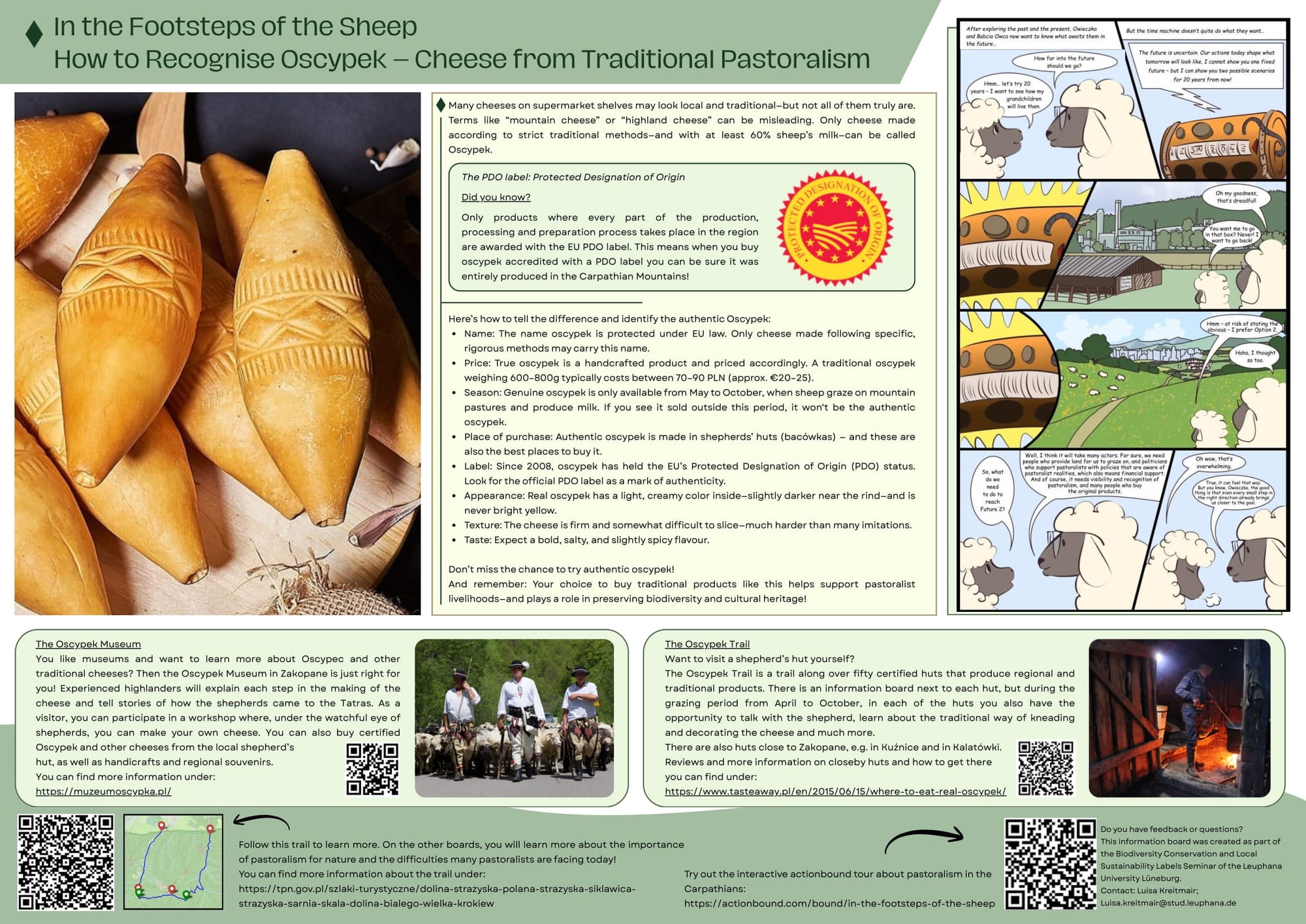
- Pastoralism and Consumer Education: “In the Footsteps of the Sheep"
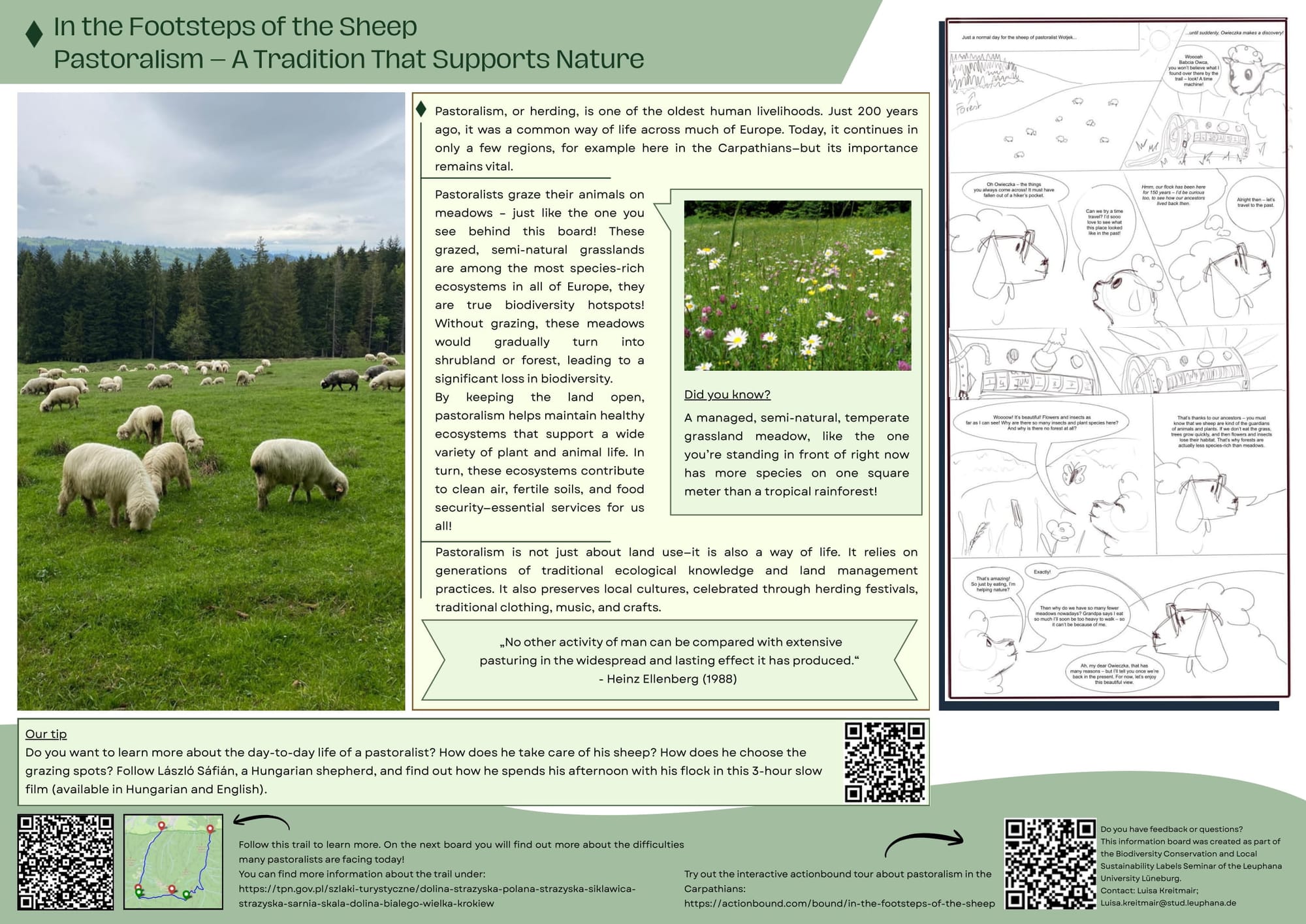
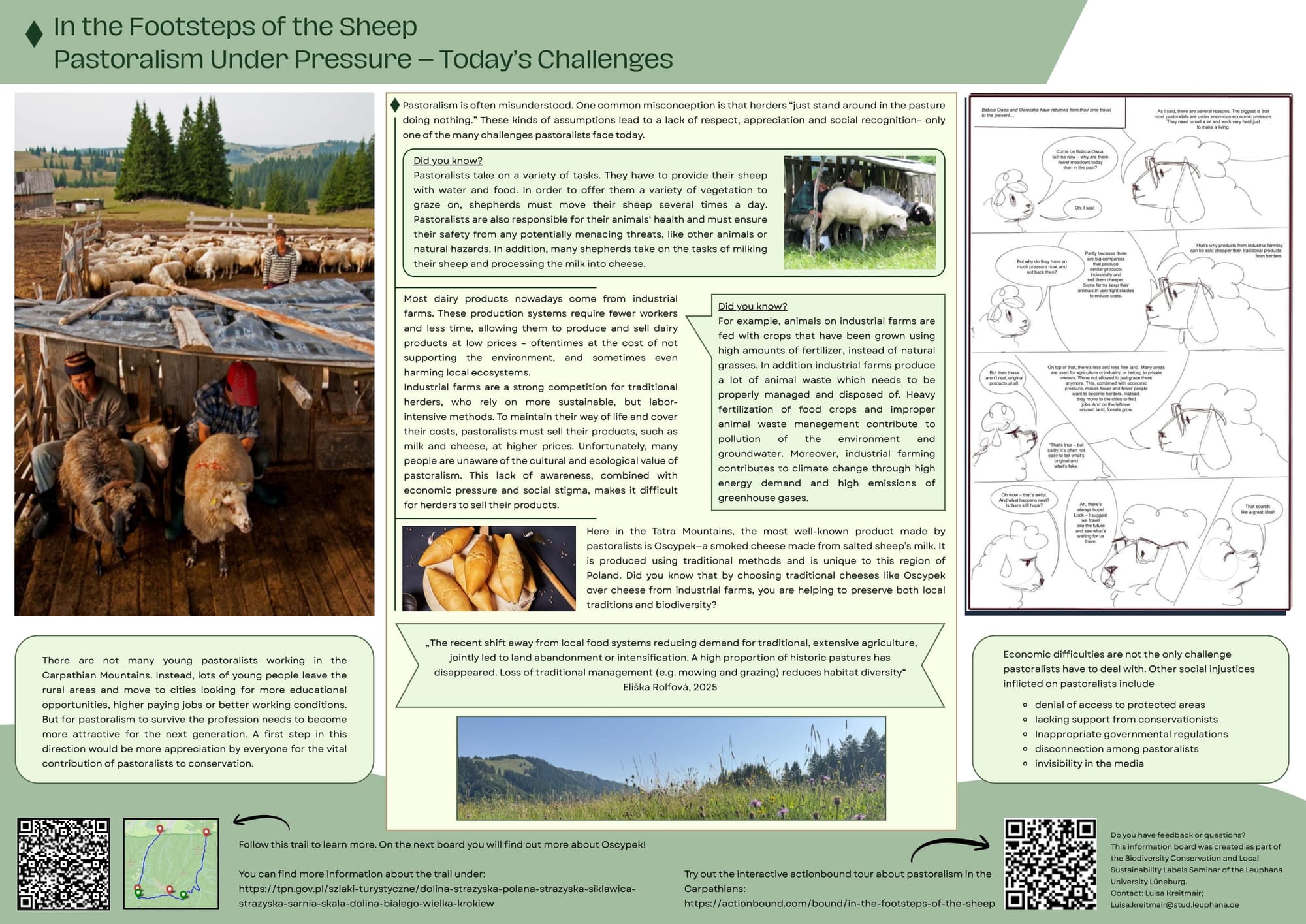
Gabriel Berg (Leuphana University) introduced his group’s project exploring the links between smoked sheep cheese production, traditional pastoralism, and grassland biodiversity. This team (Bogusława Przybyłowska, Gabriel Berg, Kira Stadler, Luisa Kreitmair, and Wasifa Noor) worked with pastoralist stakeholders to understand the impact of counterfeit cheeses on an already thin market for traditional cheeses of the region. In particular, they focused on tourists as potential clients for the authentic Oscypek, a smoked sheep cheese from the Carpathians. To this end, they created an intervention with designed information boards and an action-bound tour that engages tourists through an augmented walking trail, presenting new information points as they move along the route.
3. “What’s Rustling in the Carpathian Meadows?”
Julian Skórski, Roksana Twardawa, Łucja Winiarska, Anna Kopczak, and Katarzyna Sekta from Jagiellonian University presented their project exploring the biodiversity of Carpathian meadows. Following their visit to a local pastoralism centre, they developed educational workshops for primary schools, teaching children about the usefulness and ecological roles of wild plants. To further spread awareness, the team designed an informative leaflet, which has been distributed through visitor and information centres across Poland.
After the student presentations, Tamara Mitrofanenko introduced the Carpathian Convention, its structure, and how the early career researchers could engage with its various working groups. She then led a workshop on engaging with multiple policy priorities in the Carpathian region.
After a short break, Dr. Agnieszka Wypych and Dr. Magdalena Kubal-Czerwińska shared insights from the Jagiellonian University Transdisciplinary Seminar, summarising the outcomes of additional student projects not presented in person.
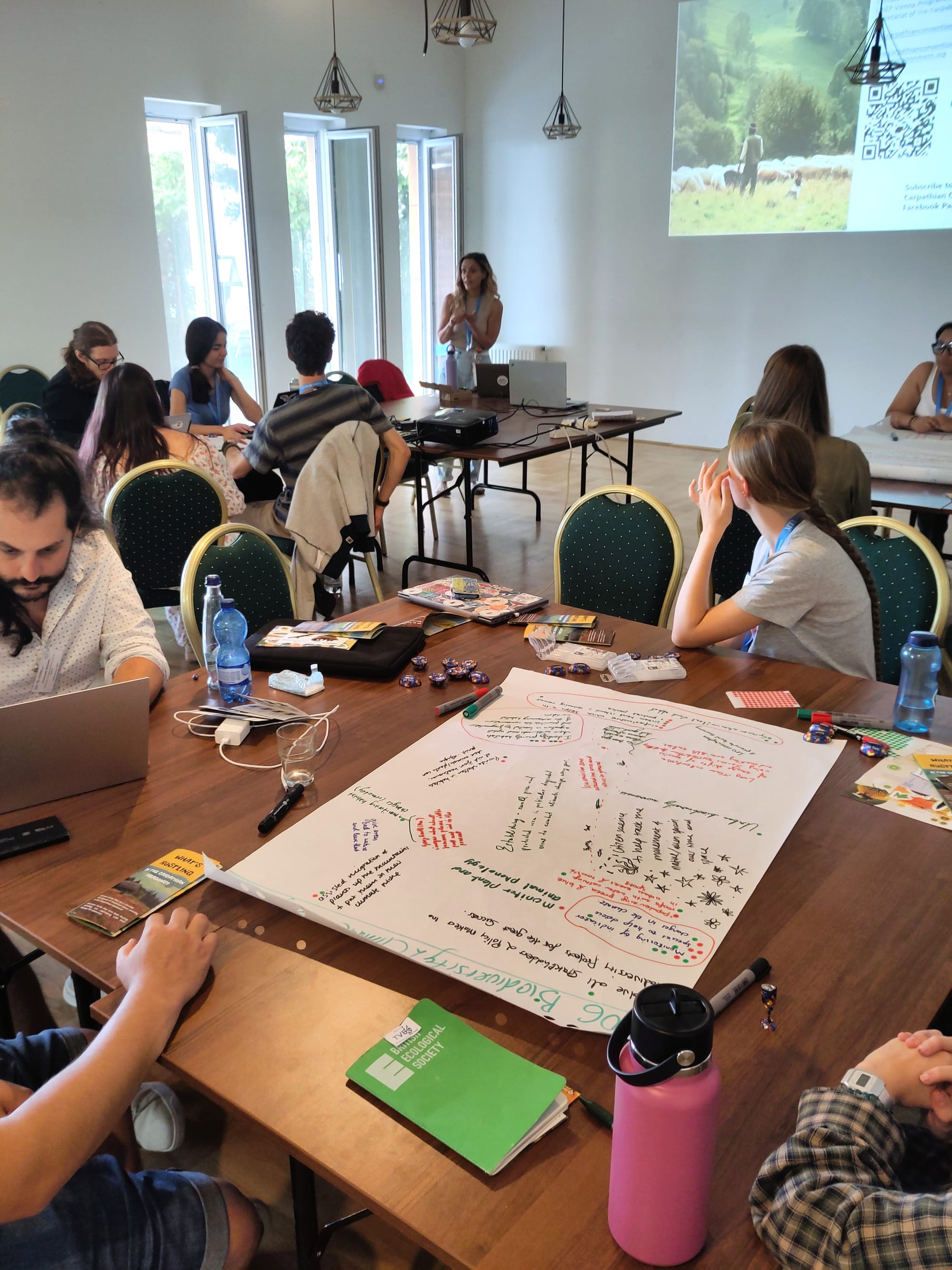
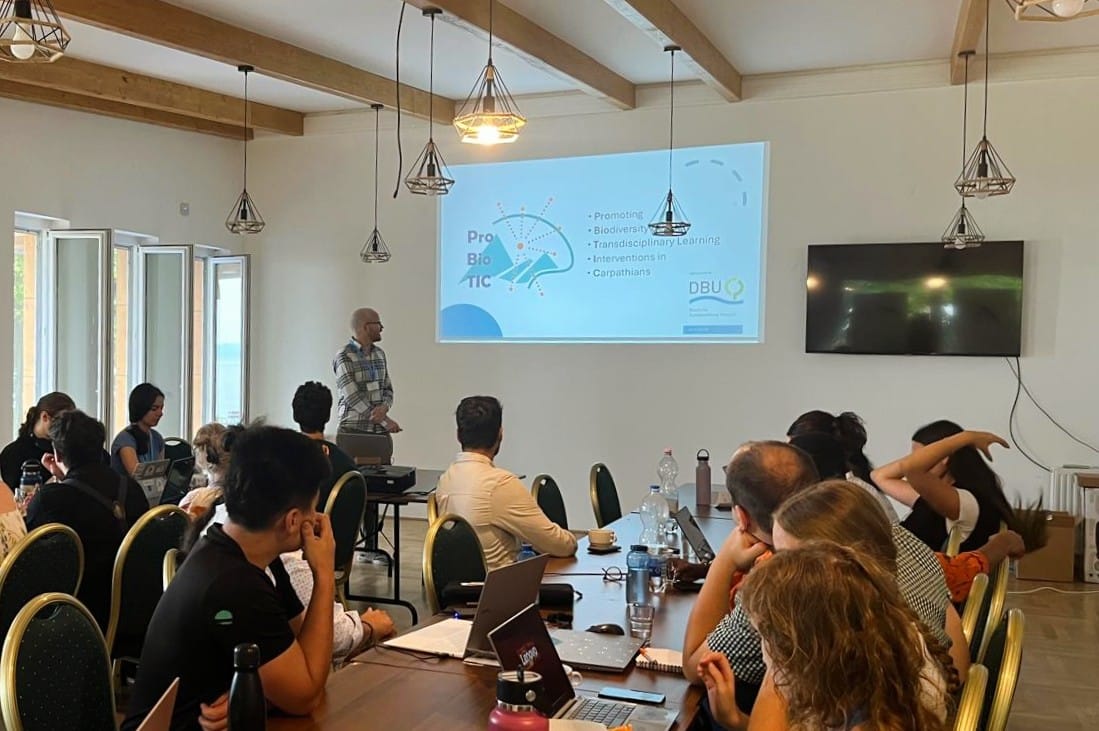
On the left: Tamara Mitrofanenko presenting the Carpathian Convention, ©Senan Gardiner. On the right: Senan Gardiner presenting ProBioTIC project, ©Tamara Mitrofanenko
To conclude the day, Senan Gardiner presented an overview of the ProBioTIC project and led a workshop on the core theory of change from transdisciplinary projects, focusing on futures competence. He introduced participants to the concept of backcasting: envisioning a desirable future, identifying the threats if no action is taken, and mapping the steps required to achieve that better outcome. While last year’s SCCS training focused on communication skills for stakeholder collaboration, this year’s emphasis was on developing and communicating future scenarios. This shift responded directly to participant feedback about the challenges of facilitating dialogue and shared visions among diverse stakeholders.
By equipping the scientific community with future-oriented and transdisciplinary methodologies, ProBioTIC and SCCS sought to strengthen participants’ ability to collaborate with local stakeholders, envision shared futures, and advance sustainable biodiversity protection across the Carpathians and beyond.